
Solar Battery Backup 101: What Las Vegas Homeowners Need to Know
Solar Battery Backup 101: What Las Vegas Homeowners Need to Know
Your solar panels generate electricity when the sun shines. But what happens after sunset—or when the power goes out?
Solar energy has become a familiar sight throughout Southern Nevada. From residential rooftops in Las Vegas, Henderson & Boulder City to large-scale solar projects across the desert, more people are recognizing the value of harnessing Nevada's abundant sunshine.
But there's one important question many homeowners don't think about until they experience a power outage:
If I already have solar panels, why would I need a battery backup system?
The answer comes down to how solar energy is generated, stored, and used.
At Paramount Services, we help Southern Nevada homeowners understand their existing solar systems and explore battery backup solutions that fit their needs.
In the first installment of our Solar Power Beyond Sunset educational series, we're breaking down the basics of solar battery storage, how it works, and what homeowners should know before adding a battery to their home.
What Is a Solar Battery Backup System?
A solar battery backup system stores electricity so it can be used later instead of being consumed immediately or sent to the electrical grid.
Think of it as a rechargeable energy reserve for your home.
During the day, your solar panels generate electricity from sunlight. Depending on your system's configuration, that electricity can power your home, charge a battery, or be exported to the utility grid.
When the sun goes down, the battery can supply some of the electricity your home needs.
And when the electrical grid experiences an outage, a properly designed battery backup system may be able to keep selected household circuits—or potentially the entire home—powered for a limited period.
The key is understanding that solar panels produce electricity, while batteries store it for later use.
They serve different purposes, but they can work together to create a more flexible home energy system.
How Does Solar Battery Backup Work?
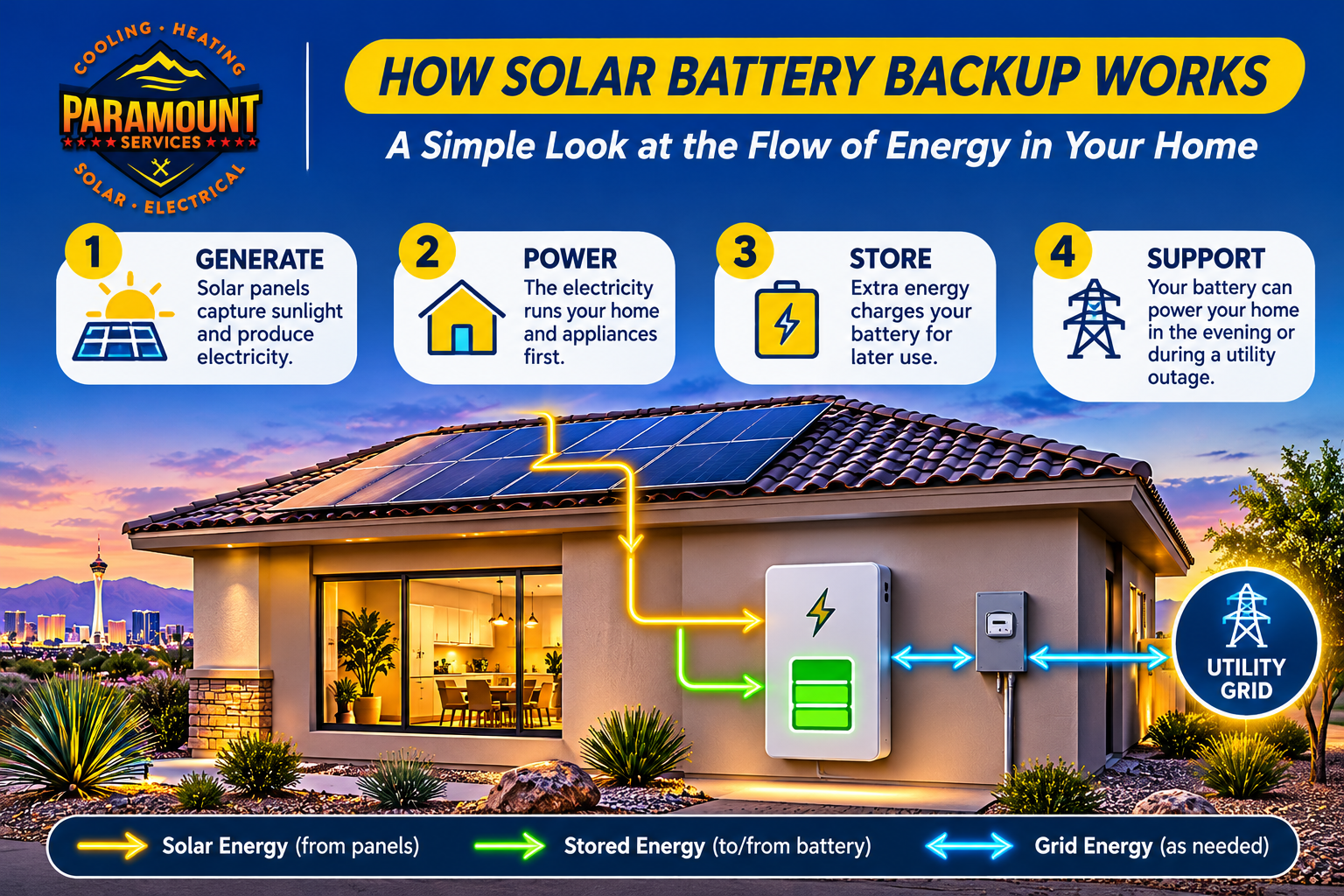
A typical solar-plus-battery system follows a relatively simple process.
Step 1: Your solar panels generate electricity.
When sunlight reaches your solar panels, they produce direct-current (DC) electricity.
Step 2: Your home uses available solar energy.
An inverter converts electricity into a form your household appliances can use.
Step 3: Excess energy may charge your battery.
Depending on your equipment and settings, electricity that isn't immediately needed can be stored instead of exported to the grid.
Step 4: Your battery supplies stored energy when needed.
Your system may be configured to use stored electricity in the evening, during certain utility rate periods, or when grid power becomes unavailable.
Step 5: The system manages energy automatically.
Compatible battery management and control equipment monitors charging, discharging, and operating conditions.
The exact process varies depending on the battery manufacturer, inverter, system design, and homeowner preferences.
Will My Solar Panels Work During a Power Outage?
This is one of the biggest misconceptions about residential solar energy.
Having solar panels does not automatically mean your home will have electricity during a power outage.
Most traditional grid-connected solar systems are designed to shut down when utility power is lost.
This safety feature helps prevent electricity from being sent into utility lines while crews may be working to restore service.
A properly configured solar-plus-storage system can operate differently.
With compatible inverters, battery storage, and the necessary isolation equipment, a home may be able to continue powering designated electrical loads while safely disconnected from the utility grid.
For example, a battery backup system might help keep the following operating:
Refrigerator and freezer
Internet equipment and Wi-Fi
Selected lighting circuits
Phone and device chargers
Certain medical or essential household devices
Other approved circuits within the system's capacity
However, battery backup capacity is not unlimited.
Large electrical loads, including central air conditioning, electric ovens, and other high-demand appliances, may require additional battery capacity or specialized equipment.
For Las Vegas homeowners, this is especially important during summer, when air conditioning can account for a significant portion of household electricity consumption.
Can a Solar Battery Power My Entire House?
Possibly—but not every battery system is designed to do so.
There are two common approaches to residential battery backup.
Essential-Loads Backup
An essential-loads system is designed to power selected circuits during an outage.
These might include refrigeration, internet access, lighting, and other prioritized equipment.
This approach can help homeowners focus their battery capacity on the items that matter most.
Whole-Home Backup
Whole-home backup is designed to support a broader range of household electrical loads.
Depending on the home's electrical demand, this may require multiple batteries, compatible inverters, load-management equipment, and additional electrical work.
Even a whole-home backup system has limits. Operating multiple high-demand appliances simultaneously can shorten battery runtime or exceed the system's power capacity.
The right system isn't necessarily the largest battery available. It's the one designed around your household's priorities.
How Long Will a Solar Battery Last During an Outage?
Battery runtime depends on several factors, including:
Usable battery capacity
Number of appliances operating
Power consumption of those appliances
Battery charge level when the outage begins
System efficiency
Whether solar panels can recharge the battery during the outage
Battery capacity is commonly measured in kilowatt-hours (kWh).
For example, a battery with 10 kWh of usable energy could theoretically power an average 1 kW electrical load for approximately 10 hours.
In real-world conditions, actual runtime may be shorter because of system losses, battery operating limits, and changing household electricity demand.
If your household uses more electricity, the stored energy will be depleted more quickly.
A properly configured solar-plus-storage system may also recharge the battery during daylight hours, helping extend backup availability when sunlight and system conditions permit.
This is why evaluating your household's actual electricity usage is so important before selecting battery equipment.
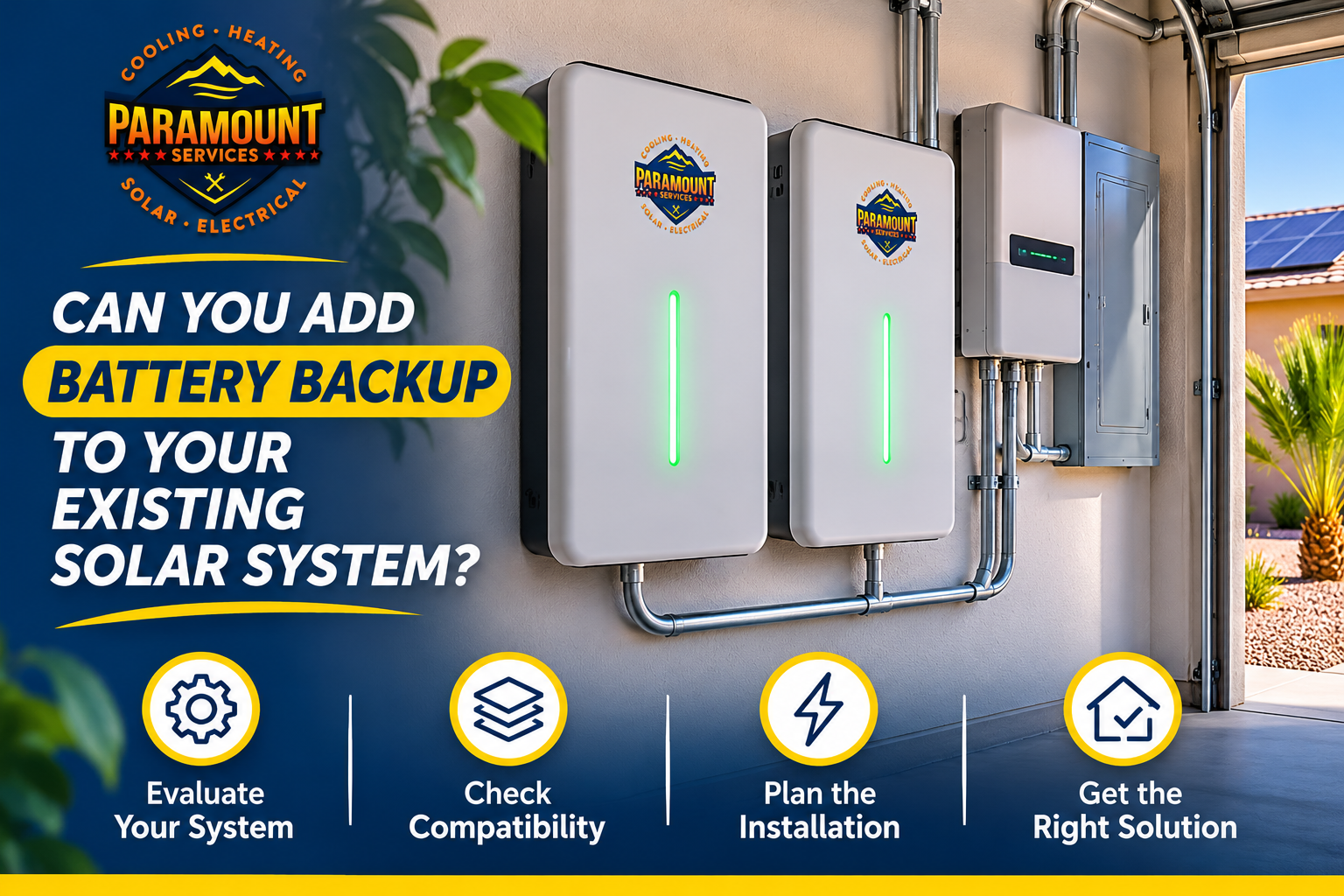
Can I Add Battery Backup to My Existing Solar Panels?
In many cases, yes!
Homeowners don't necessarily need to replace their entire solar installation to add energy storage.
However, not every battery works with every solar system.
Compatibility depends on several factors, including:
Existing inverter equipment
Solar system age and configuration
Electrical panel capacity
Battery and inverter compatibility
Available installation space
Local permitting and utility requirements
Desired backup capacity
Some installations can use AC-coupled batteries that work alongside existing solar equipment.
Others may benefit from inverter upgrades or different system configurations.
At Paramount Services, we work with multiple battery manufacturers rather than limiting homeowners to a single brand.
This allows us to evaluate available options based on equipment compatibility, household energy needs, and installation requirements.
In our next article, we'll explore what it takes to add battery backup to an existing solar system—and why compatibility matters.
Could Battery Backup Help Lower My Electric Bill?
Potentially, depending on your electricity rate plan, solar production, and how the battery is configured.
Some battery systems can store electricity for use during periods when utility electricity is more expensive.
For example, NV Energy offers time-of-use pricing options in which electricity rates vary depending on when energy is consumed.
Under certain rate structures, storing energy and using it during higher-priced periods may help reduce electricity purchases at those rates.
However, the financial benefits depend on several factors:
Your current utility rate plan
Solar energy production
Household electricity usage
Battery installation cost
Equipment efficiency
Net metering or export-credit arrangements
Battery operating settings
Battery backup should not be viewed as a guaranteed way to eliminate your electric bill.
For many homeowners, the primary benefit may be added backup capability and greater control over when stored electricity is used.
Is Solar Battery Backup Worth Considering in Las Vegas?
Southern Nevada homeowners have several reasons to explore battery storage.
Greater Preparedness for Power Outages
A properly configured battery system can help maintain electricity to designated household circuits during certain utility outages.
More Control Over Solar Energy
Instead of immediately exporting all unused solar electricity, homeowners may be able to store some for later consumption.
Flexible Energy Management
Some systems allow homeowners to prioritize backup reserves, evening electricity usage, or other energy-management settings.
Options for Existing Solar Owners
Homeowners who already have solar panels may be able to expand their systems without starting over.
However, battery storage isn't automatically the best financial or technical choice for every property.
The decision should consider your household's electrical needs, existing solar equipment, backup priorities, and budget.
Choosing the Right Battery Backup System
With multiple battery manufacturers and system configurations available, homeowners may wonder where to begin.
Rather than choosing a battery based solely on its brand name, start with a few practical questions:
What do I want to keep running during an outage?
Consider whether your priority is essential appliances, selected rooms, or broader household coverage.
How long do I want backup power to last?
A few hours of backup requires a different approach than preparing for an extended outage.
Is my existing solar system compatible?
Your inverter and electrical configuration can influence which battery solutions are appropriate.
Where can the equipment be installed?
Battery placement must account for manufacturer requirements, electrical safety, applicable codes, and local permitting.
What is my budget?
Installation costs vary based on equipment, battery capacity, electrical modifications, and the complexity of the project.
A professional evaluation can help homeowners compare realistic options before making an investment.
Explore Solar Battery Backup With Paramount Services
Your existing solar panels may already be helping you generate electricity from Nevada's abundant sunshine.
Adding battery storage could provide another way to use that energy and prepare for unexpected power interruptions.
At Paramount Services, we help homeowners throughout Las Vegas, Henderson, North Las Vegas, and surrounding Southern Nevada communities explore battery backup solutions for existing solar installations.
Because we work with multiple battery manufacturers, we're able to consider different equipment options rather than focusing on one brand.
Our solar services also include solar monitoring, troubleshooting, repairs, panel cleaning, and critter guard protection.
Already have solar panels and wondering whether battery backup is right for your home?
Contact Paramount Services (702) 861-0036 to discuss your existing system and explore available options.
Visit:www.ParamountServicesLV.com
Nothing is More Paramount Than Your Comfort.
Coming Next in Our Solar Power Beyond Sunset Series
Part 2: Can You Add Battery Backup to an Existing Solar System?
We'll explore equipment compatibility, inverter considerations, installation requirements, and what homeowners should know before upgrading their existing solar systems.
Sources and further reading