
Mini Split Electrical Requirements: What Las Vegas Homeowners Need to Know Before Installation
Mini Split Electrical Requirements: What Las Vegas Homeowners Need to Know Before Installation
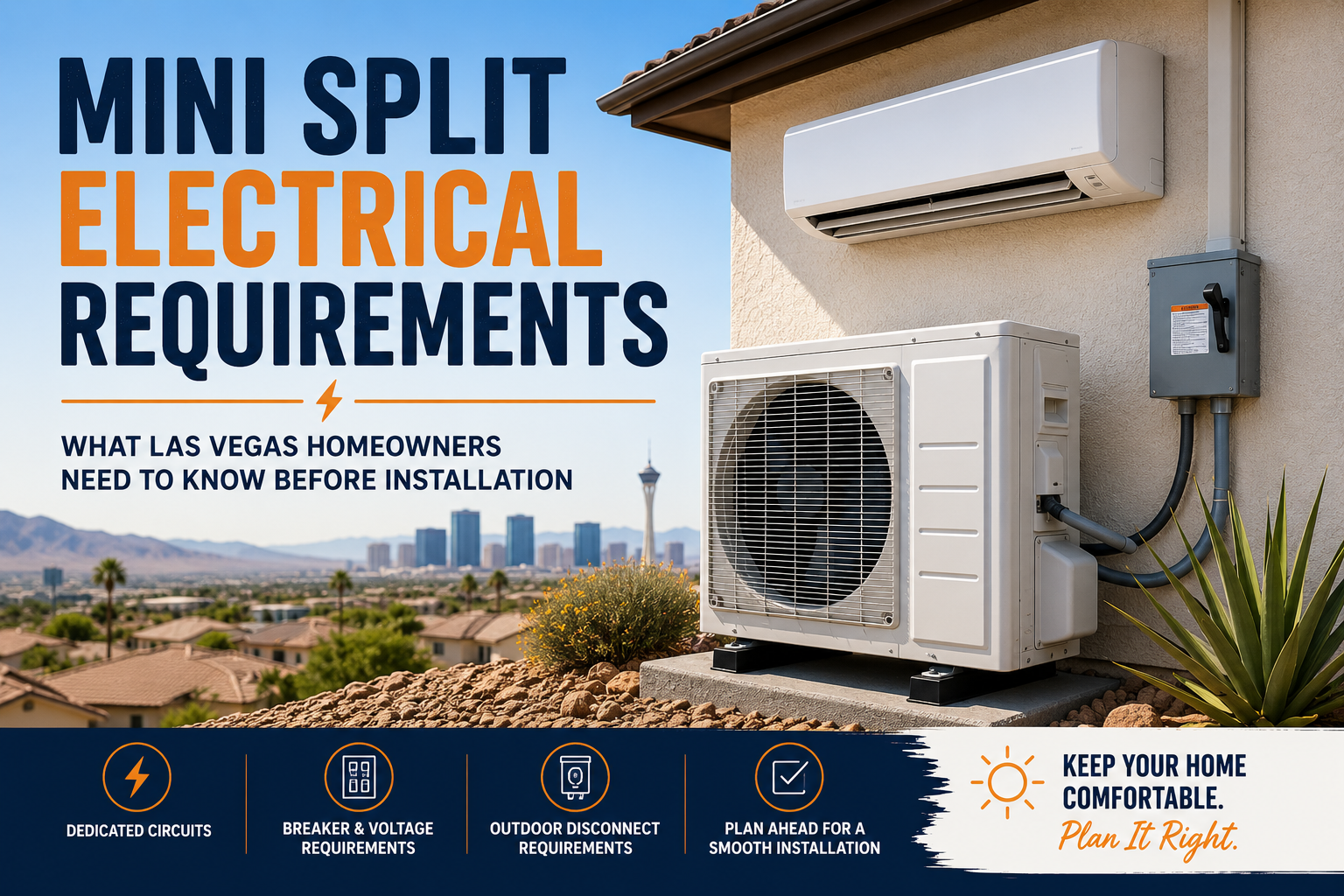
Mini split systems can be an excellent option for cooling and heating individual rooms, additions, garages, workshops, casitas and other spaces where traditional ductwork may not be practical.
But before purchasing a mini split, there is one important part of the installation homeowners sometimes overlook:
The electrical requirements.
A mini split isn't necessarily something you can simply mount on the wall and plug into an existing outlet. Depending on the equipment, your home may need a dedicated electrical circuit, the correct breaker and wiring, an outdoor disconnect, and enough capacity in the electrical panel to safely support the system.
Here's what Las Vegas homeowners should know before choosing a mini split.
Does a Mini Split Need a Dedicated Electrical Circuit?
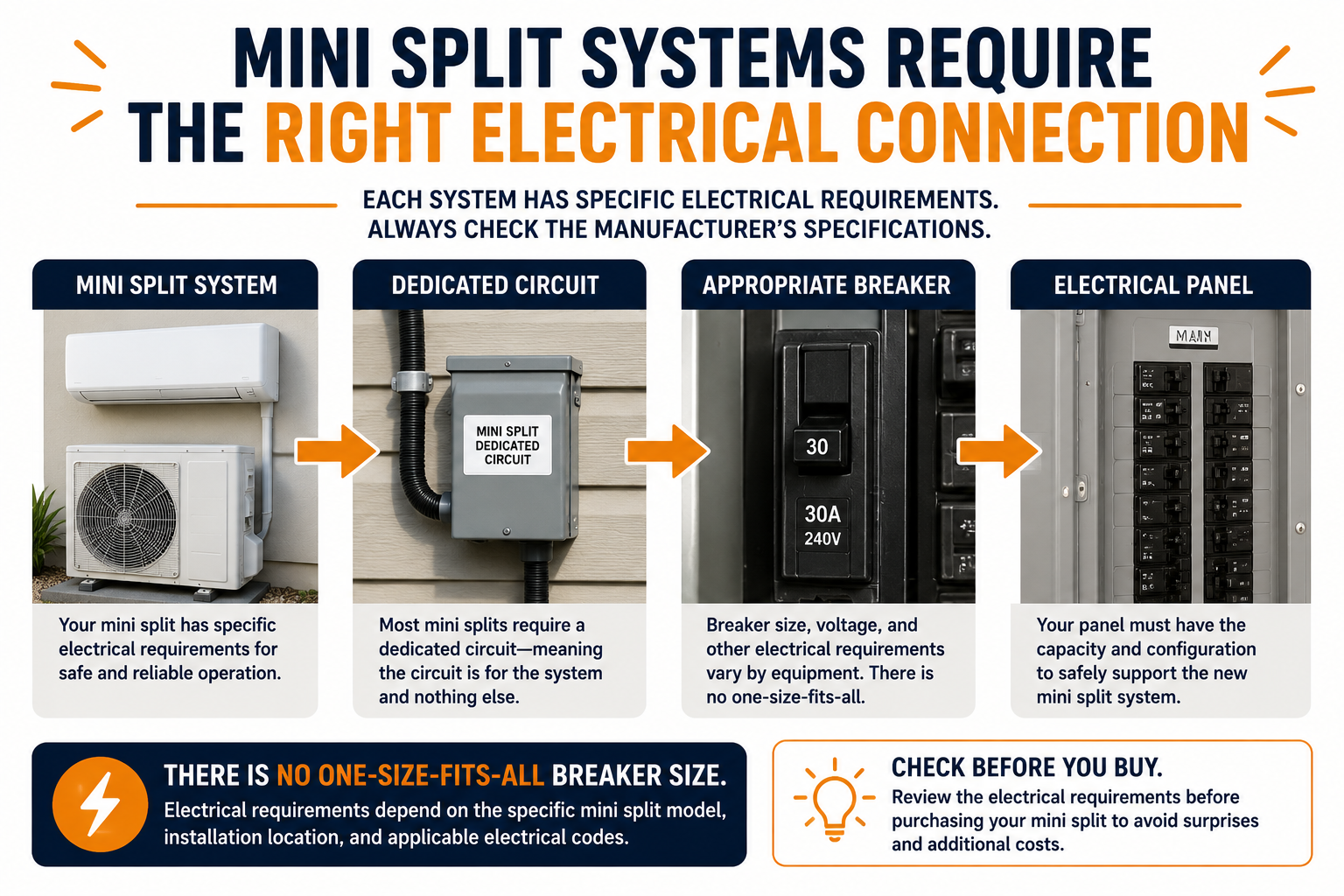
Many mini split systems require a dedicated circuit, meaning the circuit supplies the mini split rather than being shared with lights, receptacles or other household equipment.
However, the electrical requirements aren't the same for every mini split.
The correct circuit must be determined using the manufacturer's specifications for the exact equipment being installed and applicable electrical requirements.
That's why the electrical portion of the project should be considered before purchasing equipment—not after the mini split arrives at your house.
Can You Plug a Mini Split Into a Regular Outlet?
Don't assume that you can.
Some smaller systems may be designed for configurations that differ from larger systems, but many permanently installed mini splits require a dedicated electrical connection rather than simply plugging into an existing household receptacle.
The answer depends on the specific mini split model and its electrical specifications.
If you're shopping for a system online or considering a DIY mini split, check the electrical requirements before purchasing it.
Does a Mini Split Use 120V or 240V?
Mini splits are available with different voltage requirements.
Depending on the equipment, you may encounter systems designed for approximately 120-volt or 208/230/240-volt electrical supplies.
You shouldn't select the electrical circuit based simply on the physical size of the mini split or its advertised BTU rating.
The manufacturer's specifications for the exact model should identify the required voltage and other electrical requirements.
Why does this matter?
If your home doesn't currently have the appropriate electrical circuit available at the installation location, additional electrical work may be necessary before the mini split can be installed correctly.
What Breaker Size Does a Mini Split Need?
There isn't one breaker size that works for every mini split.
This is an important distinction because online searches often produce answers such as:
“A mini split needs a 20-amp breaker.”
That may be appropriate for a particular system, but it should not be treated as a universal rule.
The required overcurrent protection and conductor sizing depend on the equipment specifications and installation requirements.
The equipment documentation and nameplate provide important electrical information that should be reviewed before determining what the installation requires.
Don't simply install a larger breaker because a breaker is tripping. A tripping breaker can indicate a problem that should be properly diagnosed.
Does a Mini Split Need an Outdoor Disconnect?
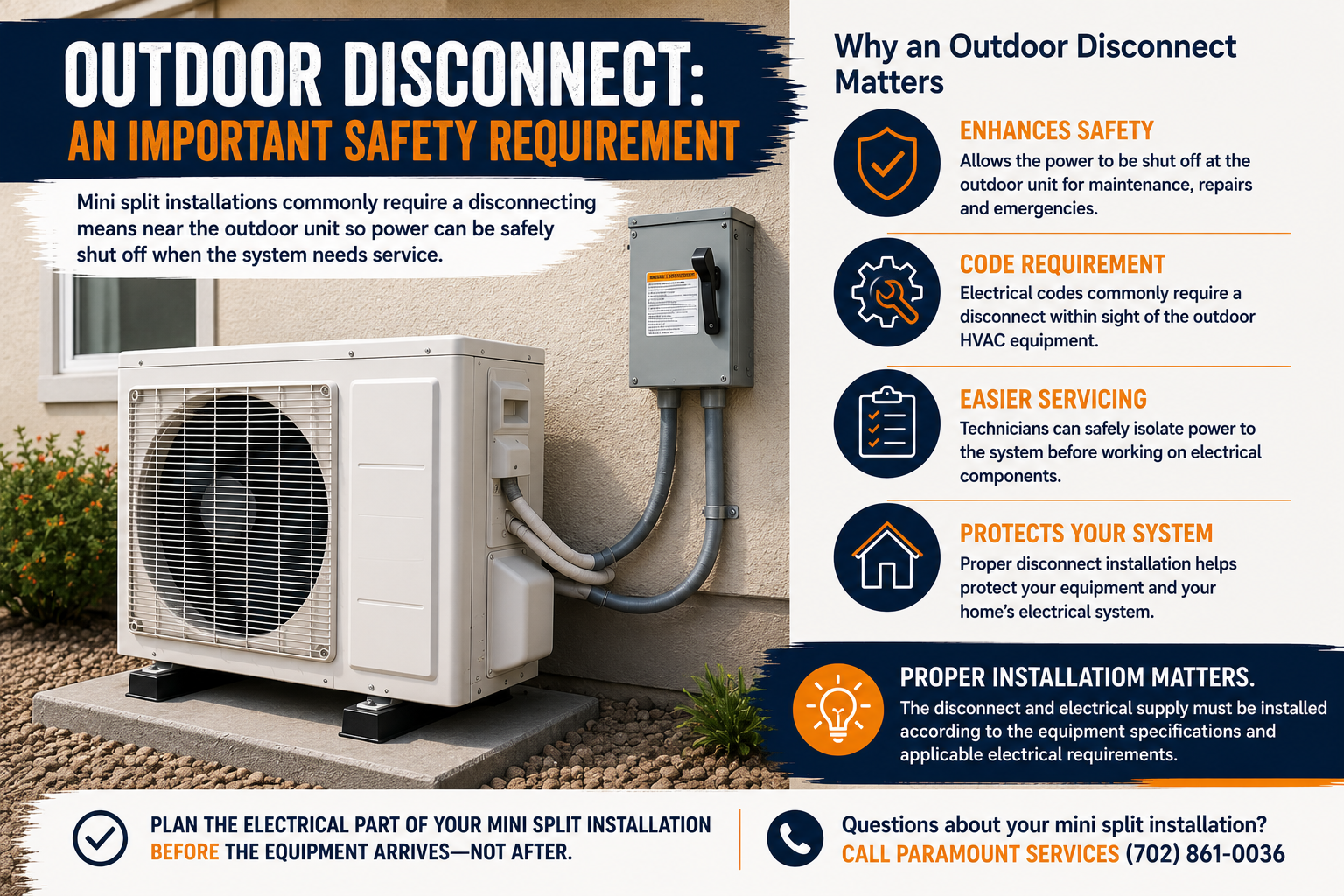
Mini split installations commonly require a disconnecting means near the outdoor equipment so electrical power can be shut off when the equipment needs to be serviced.
Exactly how the disconnect and electrical supply need to be installed depends on the equipment, installation and applicable electrical requirements.
This is another reason the electrical side should be planned along with the HVAC installation rather than treated as an afterthought.
Can My Existing Electrical Panel Handle a Mini Split?
That's a question worth answering before installation day.
Adding another electrical load to a home doesn't automatically mean the electrical panel must be replaced. But the existing electrical system should be evaluated to determine whether it can properly support the additional equipment.
Things that may need to be considered include:
Available panel space
Existing electrical loads
Required voltage
Circuit requirements
Breaker requirements
Wiring/conductor requirements
Equipment specifications
Location of the indoor and outdoor equipment
If the electrical panel doesn't have the appropriate capacity or configuration, additional electrical work may be needed.
Should I Buy the Mini Split Before Having the Electrical Checked?
You can, but we think there's a better order.
Choose the location → determine your heating/cooling needs → identify appropriate equipment → review its electrical requirements → verify your electrical system → purchase/install.
This can help prevent an unpleasant surprise where a homeowner purchases equipment only to discover that additional electrical work is required before it can be installed.
It's especially important when purchasing mini splits online, where the electrical requirements may not be obvious from the main product description.
Can I Install a Mini Split Myself?
DIY mini split systems have become increasingly available, but there is an important distinction between equipment marketed as DIY-friendly and the requirements for the complete installation.
Mounting equipment is only one part of the project.
Depending on the system and installation, there may also be:
Electrical work
Refrigerant-related requirements
Condensate drainage
Penetrations through exterior walls
Proper equipment placement and clearances
Manufacturer installation requirements
Permitting and inspection requirements
Improper installation can affect system performance, reliability and safety.
Before beginning a DIY project, understand everything the installation requires—not just the steps shown on the front of the box.
Do I Need a Permit to Install a Mini Split in Las Vegas?
Permit requirements can depend on the property location and scope of work.
Las Vegas Valley properties can fall under different jurisdictions, including Las Vegas, Henderson, North Las Vegas, Clark County and other authorities.
Mechanical and/or electrical permits and inspections may be required depending on the project.
Rather than assuming a permit isn't necessary, homeowners should determine which jurisdiction governs their property and verify the requirements for the proposed installation.
Mini Split Electrical Requirements: What Should I Check Before Installation?
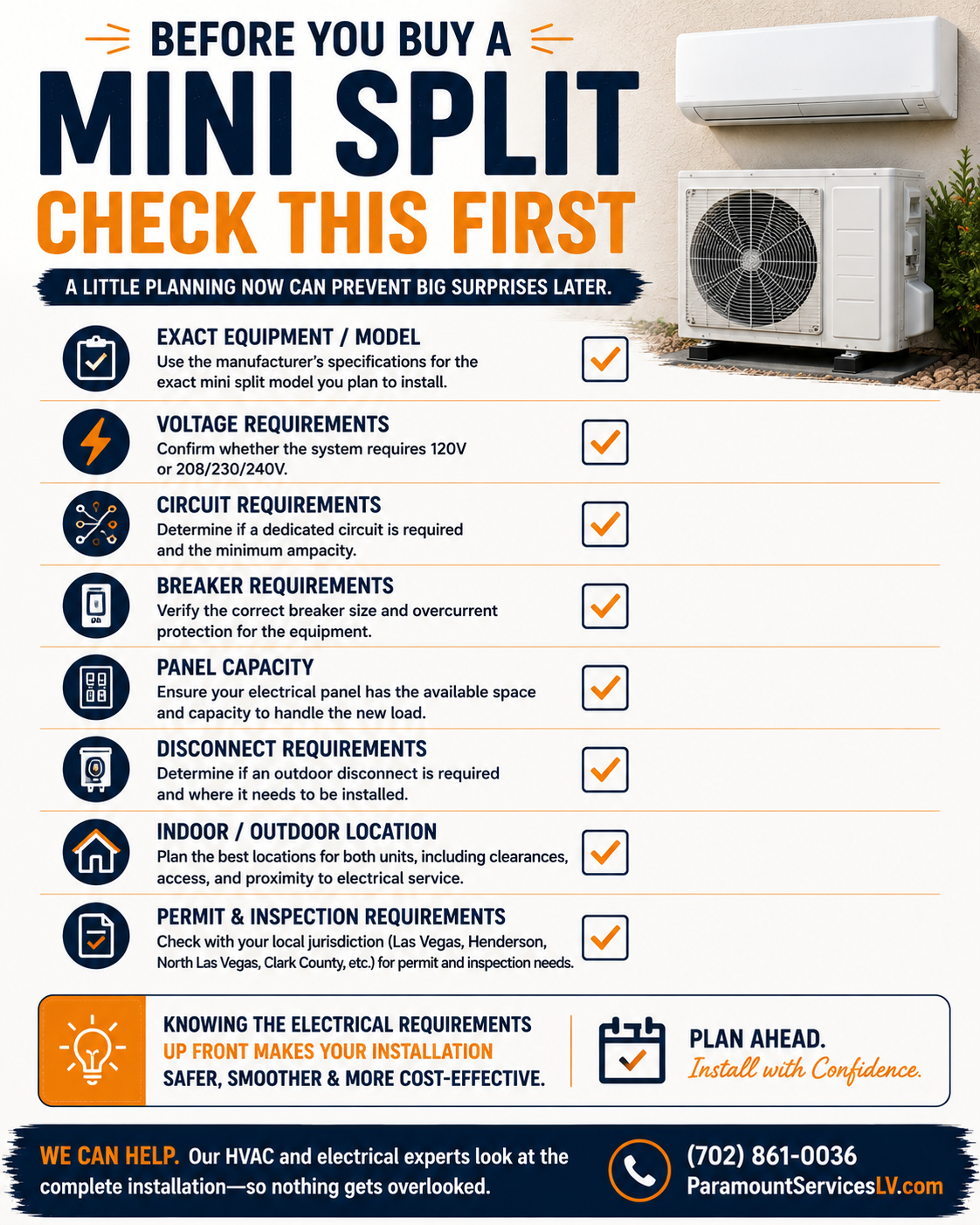
Before purchasing or installing a mini split, make sure you know:
✓ The exact mini split model
✓ Required voltage
✓ Minimum circuit requirements
✓ Required overcurrent protection
✓ Whether a dedicated circuit is required
✓ Disconnect requirements
✓ Whether your electrical panel can accommodate the new equipment
✓ Indoor and outdoor equipment locations
✓ Applicable permit and inspection requirements
Getting these answers upfront can make the installation process much smoother.
Frequently Asked Questions
Do all mini splits require 240 volts?
No. Electrical requirements vary by system. Some mini splits use lower-voltage supplies while many larger systems require approximately 208/230/240 volts. Always check the specifications for the exact equipment.
Can I use an existing circuit for my mini split?
Don't assume an existing circuit is appropriate. Many mini splits require a dedicated circuit. The equipment specifications and electrical installation requirements should determine the proper circuit.
What size breaker should I use for a mini split?
There is no universal mini split breaker size. The correct overcurrent protection depends on the specific equipment and installation requirements.
Why does my mini split keep tripping the breaker?
A breaker can trip for several reasons. Rather than increasing the breaker size or repeatedly resetting it, the system and electrical circuit should be properly diagnosed to determine why it's happening.
Can an electrician connect a mini split?
The electrical portion of a mini split installation should be completed by someone properly qualified and licensed for the work required in the applicable jurisdiction. HVAC-related portions of the installation may have separate requirements.
Should I have my electrical panel checked before buying a mini split?
It's a smart step, particularly if you're unsure about your panel's available space or the electrical requirements of the equipment you're considering. Knowing what's required before purchasing can help you understand the complete scope of the project.
Considering a Mini Split in Las Vegas?
Before purchasing equipment, make sure you understand both sides of the installation—the HVAC requirements and the electrical requirements.
Paramount Services provides HVAC and electrical services throughout Las Vegas, Henderson and Boulder City, allowing our team to evaluate more than just the equipment itself.
Already purchased a mini split and aren't sure what electrical work it requires? We can review the equipment specifications and your existing electrical system to help determine what's needed.
Paramount Services
📞 (702) 861-0036
Nothing is More Paramount Than Your Comfort.