
Furnace Smells Like Gas? What Las Vegas Homeowners Need to Know
Furnace Smells Like Gas? What Las Vegas Homeowners Need to Know
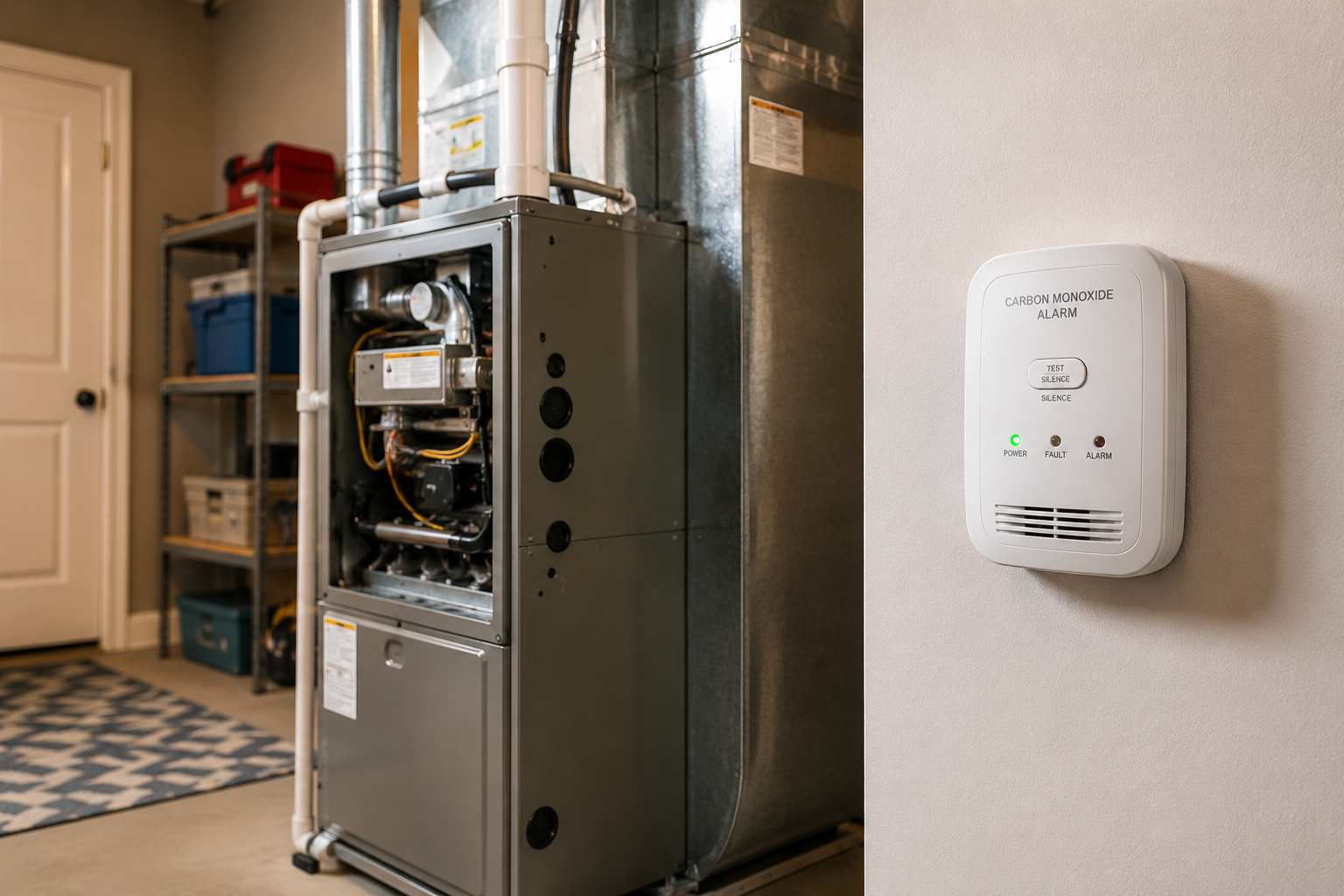
When you turn on your furnace and notice an unusual smell, it's natural to wonder whether something is wrong.
But if that smell resembles rotten eggs or sulfur, don't ignore it.
Natural gas is naturally odorless. Utilities add an odorant called mercaptan that creates a distinctive sulfur or rotten-egg smell so a potential gas leak can be detected. Southwest Gas advises anyone who suspects a natural gas leak to leave the area immediately and call 911 and Southwest Gas from a safe location.
It's also important to understand that a natural gas leak and carbon monoxide are not the same thing. Carbon monoxide cannot be detected by smell.
Here's what Las Vegas homeowners should know about furnace odors, natural gas and carbon monoxide before heating season begins.
What Should I Do If My Furnace Smells Like Gas?
If you smell a sulfur-like or rotten-egg odor and suspect natural gas, treat it as a potential gas leak rather than trying to determine the source yourself.
Southwest Gas recommends:
Leave the area immediately.
Once you're safely away from the area, call 911 and Southwest Gas at 877-860-6020.
Do not remain inside trying to locate the leak or troubleshoot the furnace yourself.
Southwest Gas Emergency Information
Suspect a natural gas leak?
Leave the area first.
📞 911
📞 Southwest Gas: 877-860-6020
Southwest Gas Natural Gas Safety Information
Why Does Natural Gas Smell Like Rotten Eggs?
Natural gas itself is odorless.
A substance called mercaptan is added to natural gas to give it a recognizable sulfur or rotten-egg odor. That odor serves as an important warning that natural gas may be present where it shouldn't be.
Southwest Gas notes that even a faint or momentary sulfur-like odor can be a sign of a potential leak.
That's why a rotten-egg smell around your furnace, gas appliance or elsewhere in your home should never simply be dismissed as “the furnace starting up.”
Is a Gas Leak the Same as Carbon Monoxide?
No.
This is one of the most important distinctions for homeowners to understand.
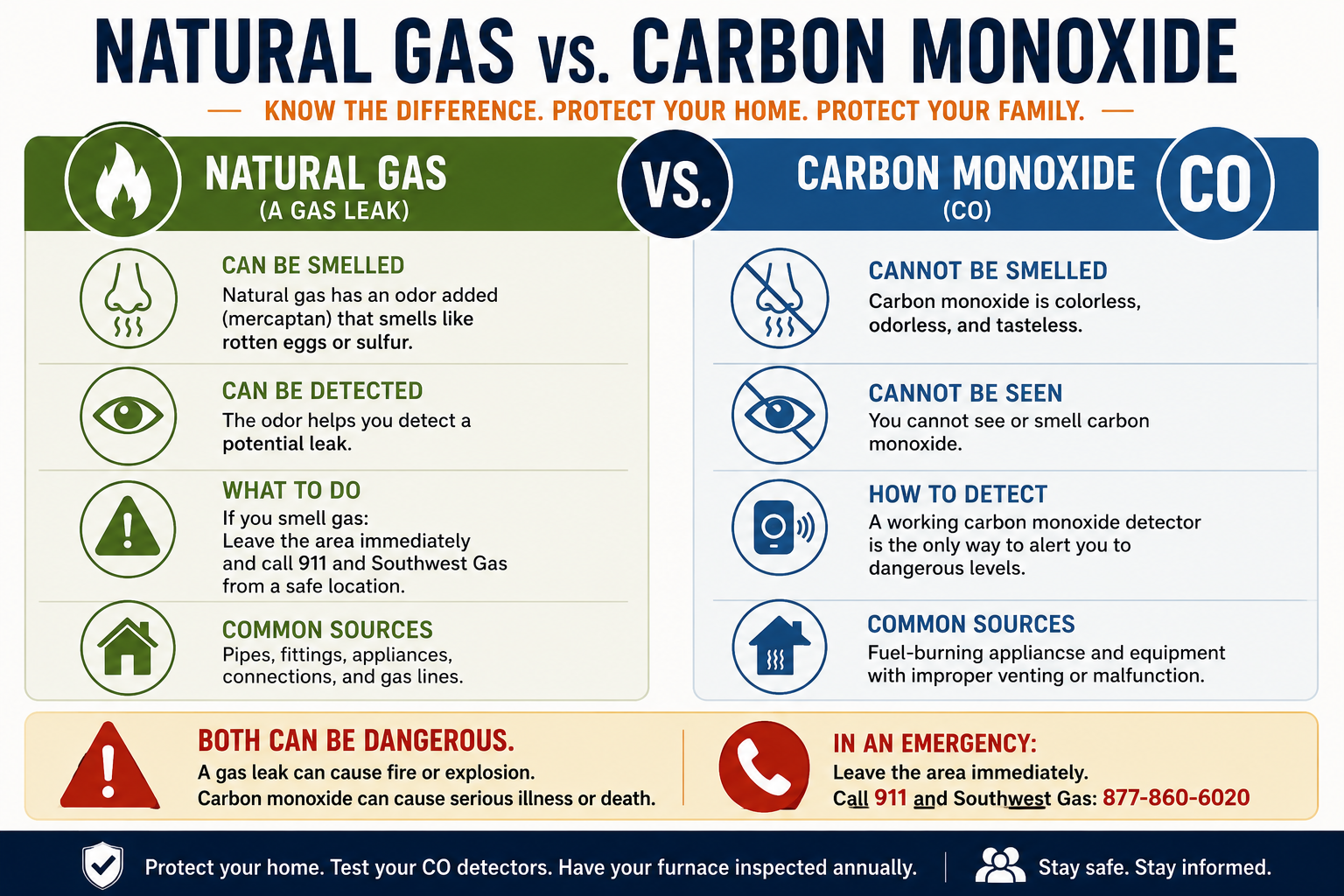
Natural Gas
Natural gas is odorized so people can recognize a potential leak. That is where the familiar rotten-egg or sulfur smell comes from.
Carbon Monoxide
Carbon monoxide—or CO—is colorless and odorless.
You cannot see or smell carbon monoxide, which is why a home can have a dangerous CO problem without an obvious odor.
Gas- and oil-burning furnaces can produce carbon monoxide during combustion, along with other fuel-burning equipment.
A home that doesn't smell like gas isn't automatically free of carbon monoxide.
Can a Furnace Cause Carbon Monoxide Problems?
Fuel-burning furnaces produce combustion gases that need to be safely vented away from the living space.
Problems involving the furnace, combustion process, venting or other components can potentially create unsafe conditions.
This is one reason the CDC recommends having heating systems and other fuel-burning appliances serviced by a qualified technician every year.
A furnace inspection isn't simply about whether the house gets warm. The overall operation and condition of the system matter too.
What Are the Symptoms of Carbon Monoxide Exposure?
Because carbon monoxide has no smell or color, physical symptoms may sometimes be one of the first indications that something is wrong.
The CDC lists common symptoms of carbon monoxide poisoning including:
Headache
Dizziness
Weakness
Upset stomach or nausea
Vomiting
Chest pain
Confusion
Symptoms are sometimes described as flu-like. High levels of exposure can cause loss of consciousness or death.
If a carbon monoxide alarm sounds or you suspect CO exposure, get outside to fresh air and seek emergency help.
Do not rely on opening windows or turning off the furnace and remaining inside.
Why Carbon Monoxide Detectors Matter
Since you can't smell, see or hear carbon monoxide, a properly functioning carbon monoxide detector is an important layer of protection.
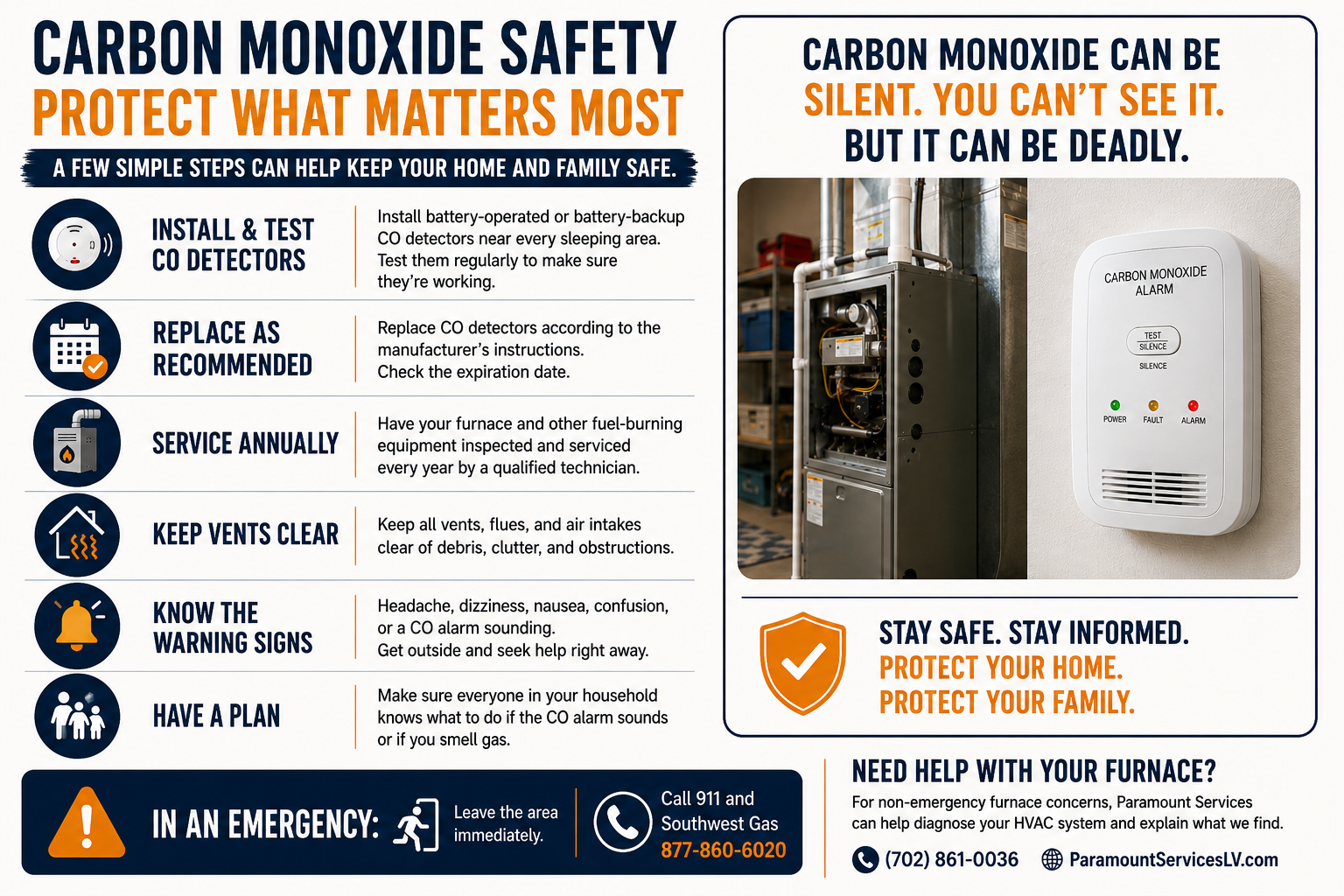
The CDC recommends installing battery-operated or battery-backup CO detectors near every sleeping area and checking them regularly to make sure they're working properly. Detectors should also be replaced according to the manufacturer's instructions.
Check the instructions for your specific alarms for proper placement, testing and replacement requirements.
And remember:
A carbon monoxide detector doesn't replace furnace maintenance or professional diagnostics.
It's an additional safety measure.
What Other Furnace Warning Signs Should You Pay Attention To?
A rotten-egg odor requires immediate gas-leak precautions, but smell isn't the only reason a furnace may need attention.
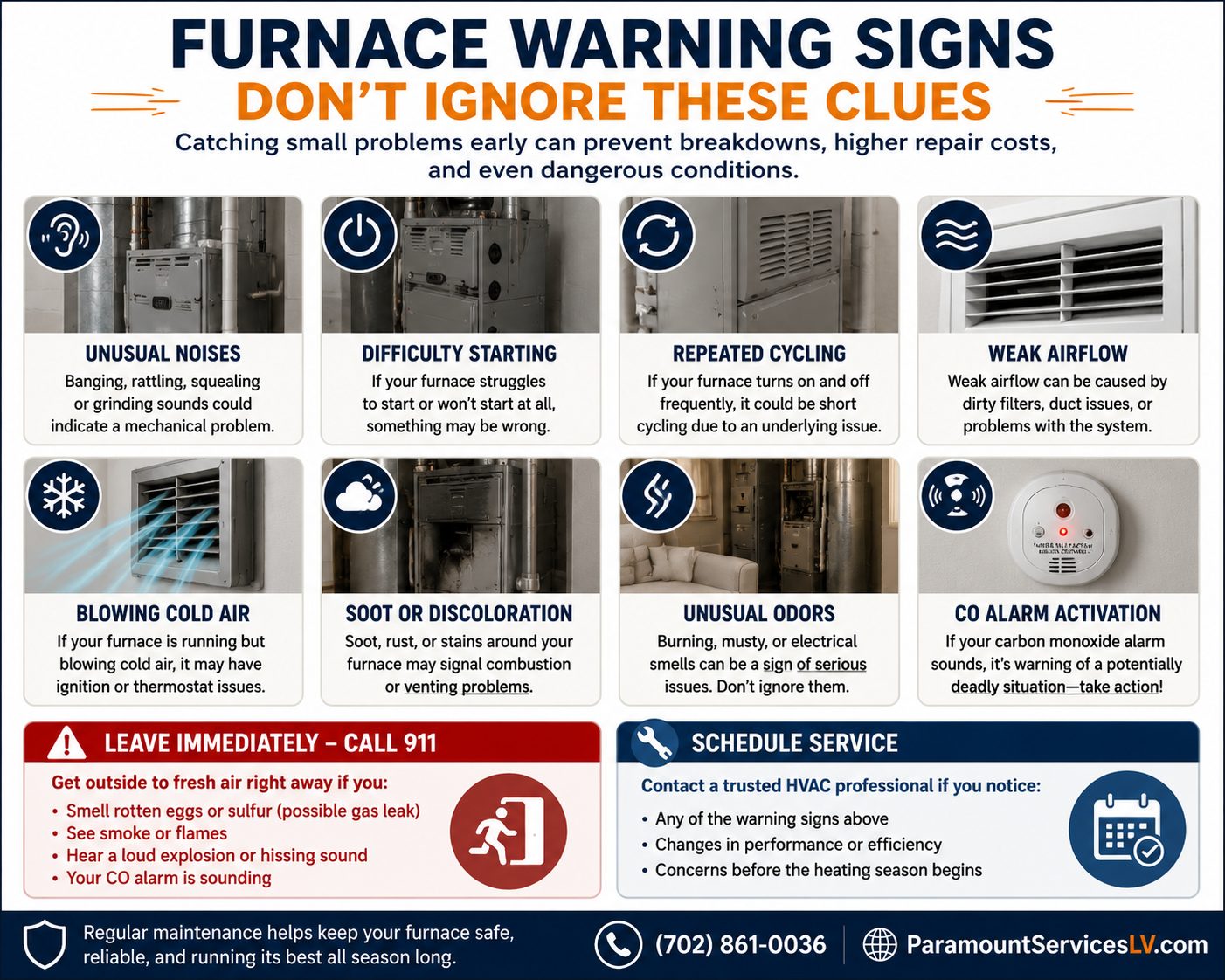
Consider having your heating system evaluated if you notice changes such as:
Unusual furnace noises
Difficulty starting
Repeated cycling
Furnace shutting off unexpectedly
Weak airflow
Furnace blowing cold air
Unusual soot or discoloration around equipment
Changes in heating performance
A carbon monoxide alarm activating
Some symptoms can have relatively straightforward causes; others can indicate a more significant problem.
The important part is diagnosing the system rather than guessing which component needs replacement.
What About a Burning Smell When the Furnace First Turns On?
Not every furnace odor indicates a natural gas leak.
For example, homeowners sometimes notice a dusty or burning-dust odor when a heating system operates after sitting unused for an extended period.
However, homeowners shouldn't use an internet description to decide that an unfamiliar odor is harmless.
If you smell rotten eggs or sulfur, suspect a natural gas leak and follow emergency gas-safety guidance.
If you notice another persistent burning, electrical, smoky or otherwise unusual odor, shut the system down when it is safe to do so and have the source evaluated.
If there is smoke, fire or an immediate danger, leave the property and call 911.
Should I Have My Furnace Checked Before Heating Season?
For fuel-burning heating systems, the CDC recommends annual servicing by a qualified technician.
For Las Vegas homeowners, early fall can be a convenient time to do that—before the first cold nights arrive and the furnace suddenly becomes something you depend on.
A heating-system evaluation can help identify concerns before the system enters regular seasonal operation.
It also gives homeowners an opportunity to address unusual performance from the previous heating season rather than waiting until the furnace stops working.
Furnace & Carbon Monoxide Safety Checklist
Before heating season:
✓ Test your carbon monoxide detectors
✓ Check detector replacement dates and manufacturer instructions
✓ Check your furnace filter
✓ Keep the furnace area clear
✓ Don't block required vents or combustion-air openings
✓ Pay attention to unusual noises or odors
✓ Have fuel-burning heating equipment serviced regularly
✓ Make sure everyone in the household knows what to do if they smell natural gas or a CO alarm sounds
A little preparation before the temperature drops can make a significant difference.
Frequently Asked Questions
Does carbon monoxide smell like gas?
No. Carbon monoxide is odorless and colorless. The rotten-egg smell associated with a potential natural gas leak comes from an odorant added to natural gas—not carbon monoxide.
What does a natural gas leak smell like?
Natural gas is odorized with mercaptan, which produces a distinctive sulfur or rotten-egg smell. If you detect that odor, leave the area and report the suspected leak from a safe location.
Should I turn off my furnace if I smell gas?
If you suspect a natural gas leak, don't stay inside attempting to troubleshoot the furnace or locate the source. Leave the area immediately. From a safe location, call 911 and Southwest Gas at 877-860-6020.
Can my furnace produce carbon monoxide?
Fuel-burning furnaces produce combustion gases, including carbon monoxide. Proper operation, venting and maintenance are therefore important. The CDC recommends having heating systems serviced annually by a qualified technician.
How often should I check my carbon monoxide detectors?
Test and maintain the detectors according to the manufacturer's instructions. The CDC recommends battery-operated or battery-backup CO detectors near every sleeping area and replacing detectors according to manufacturer guidance.
My CO detector went off. Should I call an HVAC company?
Treat the alarm as a safety issue first—not a service appointment. Get outside to fresh air and seek emergency assistance. Once the property has been determined safe, an HVAC professional can evaluate the heating equipment if appropriate.
Concerned About Your Furnace?
If there is an active gas odor, carbon monoxide alarm or suspected immediate danger, leave the area and contact the appropriate emergency resources first.
For non-emergency furnace concerns—such as unusual operation, noises, heating problems or a system you want inspected before heating season—Paramount Services can help diagnose your HVAC system and explain what we find.
Paramount Services
Serving Las Vegas, North Las Vegas, Henderson & Boulder City
📞 (702) 861-0036
🌐 ParamountServicesLV.com
Nothing is More Paramount Than Your Comfort.