
Why Is My Furnace Blowing Cold Air? 7 Possible Reasons
Why Is My Furnace Blowing Cold Air? 7 Possible Reasons
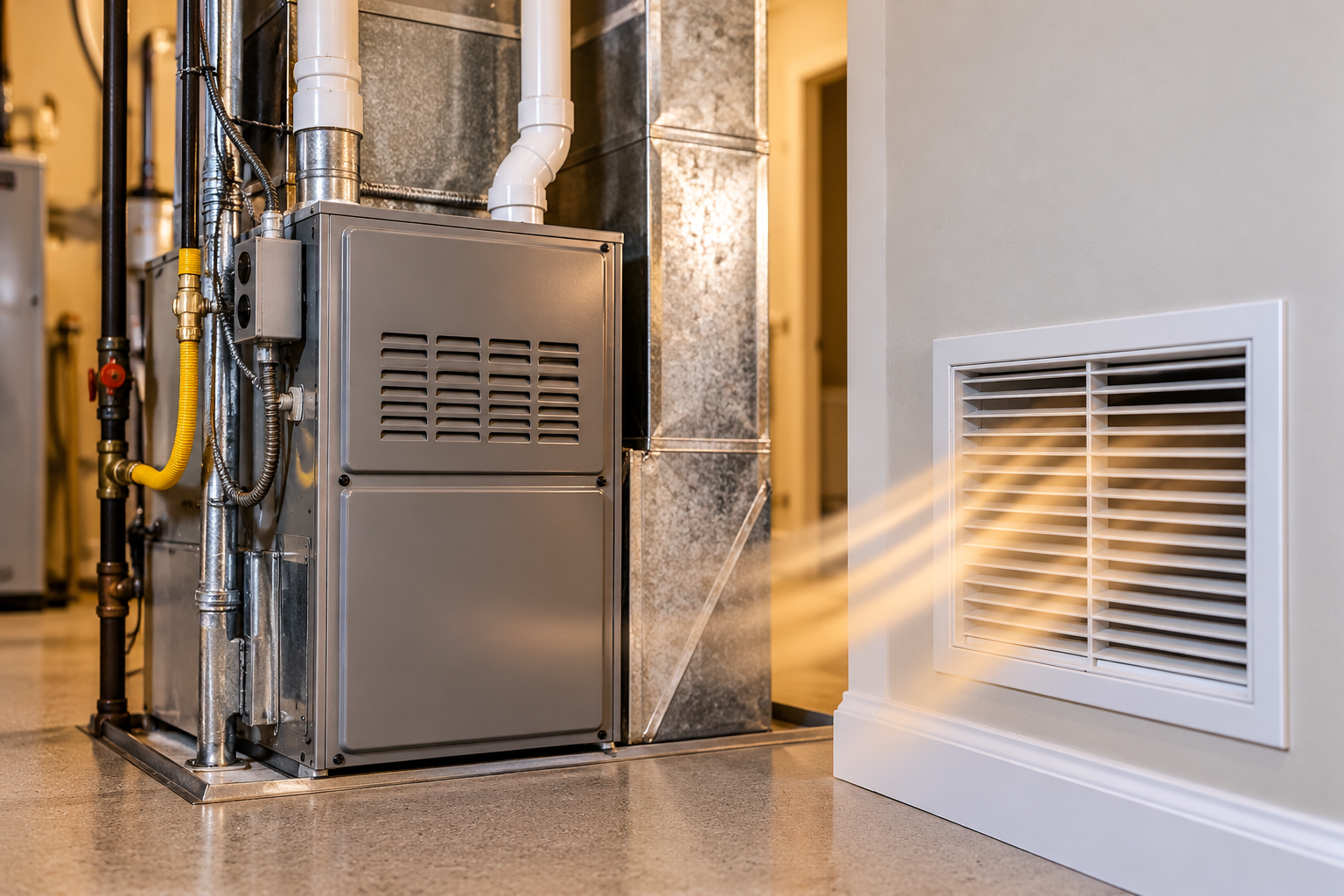
You turn up the thermostat expecting warm air, the furnace starts running…and then cold air comes out of the vents.
That can be frustrating, especially when temperatures drop and you're counting on your heating system to keep your home comfortable.
The good news is that a furnace blowing cold air doesn't automatically mean the entire system has failed. The cause could be something relatively simple, such as a thermostat setting or dirty filter, or it could point to a problem with the ignition system, flame sensor, limit switch, gas supply or another furnace component.
Here are 7 possible reasons your furnace may be blowing cold air and what Las Vegas homeowners should know before trying to troubleshoot the problem.
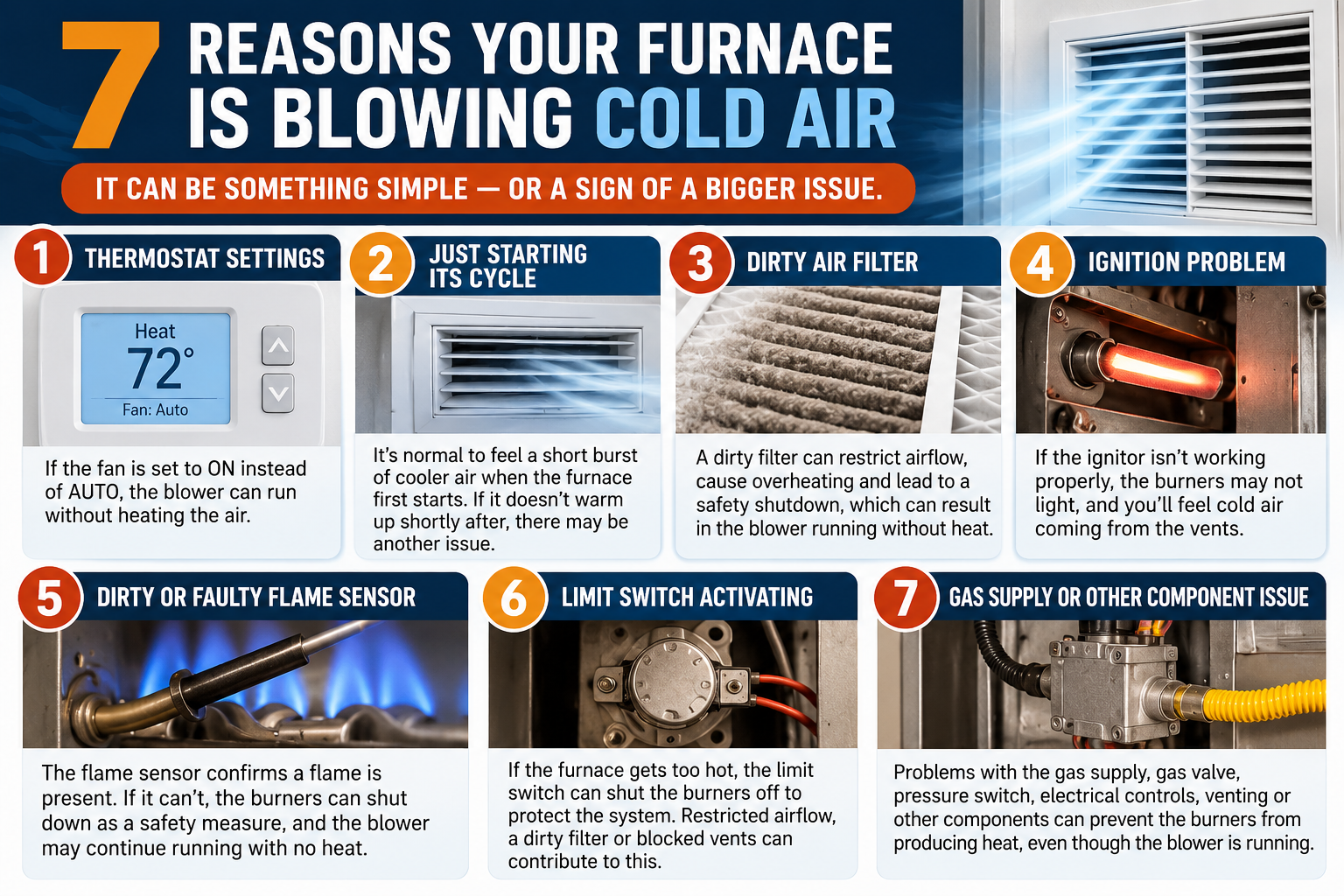
1. Your Thermostat Fan Is Set to “ON” Instead of “AUTO”
Start with one of the easiest things to check: your thermostat.
When the fan setting is set to ON, the blower can continue circulating air through your home even when the furnace isn't actively heating it.
That means you may feel room-temperature or cooler air coming through the vents between heating cycles.
With the thermostat fan set to AUTO, the blower normally operates as part of the heating cycle rather than continuously.
What You Can Check
Look at your thermostat and confirm:
Mode: HEAT
Fan: AUTO
Temperature: Set higher than the current indoor temperature
If changing the thermostat setting solves the problem, you may not have a furnace malfunction at all.
If the thermostat is correctly set and the furnace still isn't producing heat, it's time to look further.
2. The Furnace May Just Be Starting Its Heating Cycle
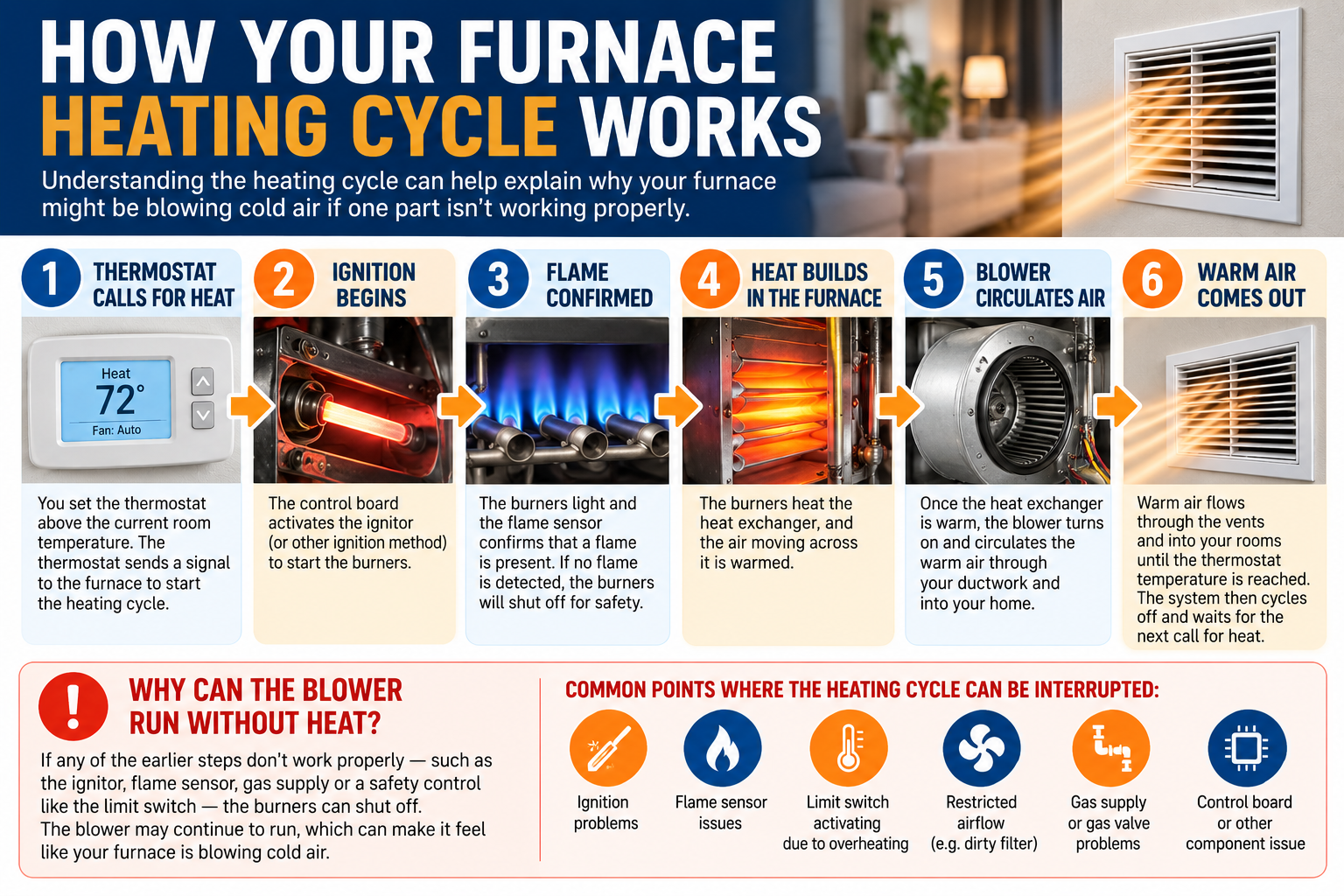
Cold air for a very short period when the system first starts doesn't necessarily indicate a problem.
There can be a brief transition while the furnace begins its heating cycle and previously unheated air in the ductwork moves through the vents.
The key is what happens next.
If the air becomes warm shortly afterward and the home reaches the thermostat setting normally, the system may be operating as expected.
However, if the furnace continues running while the vents continue blowing cold air, there's likely another issue that needs attention.
3. A Dirty Air Filter May Be Restricting Airflow
A dirty furnace filter can do more than reduce airflow.
When a filter becomes heavily restricted, the furnace may have difficulty moving enough air across the system. Depending on the equipment and conditions, this can contribute to overheating and cause a safety control to interrupt the heating cycle.
The blower may continue operating even though the burners are no longer producing heat—which can make it feel like the furnace is blowing cold air.
Check Your Furnace Filter
If it's accessible and you're comfortable doing so, inspect the filter.
Look for:
Heavy dust buildup
Visible dirt or debris
A filter that hasn't been replaced according to its recommended schedule
Reduced airflow from the vents
Replace a dirty filter with the appropriate type and size for your system.
If the furnace continues shutting down or blowing cold air after the filter has been addressed, don't keep repeatedly resetting it. There may be another problem that needs to be diagnosed.
4. The Furnace May Be Having an Ignition Problem
Your furnace needs a reliable way to ignite the fuel used to produce heat.
Depending on the furnace, the system may use an electronic ignitor or another ignition method.
If the furnace attempts to start but ignition doesn't occur properly, you may hear the system running without getting the warm air you expect.
Possible ignition-related symptoms can include:
Furnace attempts to start but doesn't heat
Repeated attempts to ignite
Furnace starts and stops
Blower runs without warm air
Heating becomes inconsistent
Ignition problems can have several causes, so replacing a component based solely on an internet diagnosis isn't a good approach.
A technician can test the system and determine why the heating sequence isn't completing correctly.
5. A Dirty or Faulty Flame Sensor Could Be Shutting the Burners Down
The flame sensor is an important furnace safety component.
Its job is to confirm that a flame is present when the furnace's gas valve is supplying fuel.
If the furnace cannot reliably confirm flame, the system can shut the burners off as a safety measure.
One symptom homeowners may notice is:
The furnace lights, runs briefly, then the burners shut off while the blower continues running.
That can result in cool or cold air coming from the vents.
Flame-sensing problems shouldn't automatically be assumed to mean the sensor itself needs replacement. The sensor may need attention, but other combustion or ignition problems can produce similar symptoms.
Proper diagnosis matters.
6. The Furnace Limit Switch May Be Interrupting the Heating Cycle
Your furnace contains safety controls designed to protect the equipment and your home.
One of those controls is commonly referred to as a limit switch.
If the furnace becomes too hot, the high-limit control can interrupt burner operation. Depending on the system, the blower may continue running to help remove excess heat.
To someone standing at a vent, that can eventually feel like the furnace is blowing cold air.
Why Would a Furnace Overheat?
Possible contributing factors can include:
Restricted airflow
Dirty filter
Blocked or restricted vents
Blower or airflow problems
Equipment or control problems
A limit switch that repeatedly activates shouldn't simply be bypassed or ignored.
It's a safety device, and repeated overheating is a symptom that deserves proper diagnosis.
7. There Could Be a Gas Supply, Control or Furnace Component Problem
If you have a gas furnace and the blower is operating but the burners aren't producing heat, the issue could involve another part of the furnace's operating sequence.
Potential problems can involve components or conditions such as:
Gas supply
Gas valve
Pressure switch
Ignition controls
Venting
Electrical controls
Safety switches
Blower operation
Control board
This is where professional diagnostics become especially important.
Several different furnace problems can create the same homeowner symptom: cold air coming from the vents.
Replacing parts based on a guess can waste money and still leave the original problem unresolved.
Why Does My Furnace Start Warm and Then Blow Cold Air?
This is another common variation of the problem.
If the furnace initially produces warm air but later begins blowing cooler air, the heating cycle may be getting interrupted.
For example, the furnace could begin heating normally and then shut the burners down because a safety control detects a problem.
The blower may continue running afterward.
Possible causes include airflow restrictions, overheating, flame-sensing issues or other control problems.
The sequence of events is useful diagnostic information.
If you schedule furnace service, tell the technician exactly what you've noticed:
Does it start warm?
How long before the air turns cold?
Does the furnace shut off and restart?
Does the thermostat still show a call for heat?
Those details can help during diagnosis.
Why Does My Furnace Keep Turning On and Off?
When a furnace repeatedly starts and stops without completing a normal heating cycle, homeowners often describe it as short cycling.
Short cycling can have multiple causes, including airflow, thermostat, ignition, flame-sensing, overheating or control-related issues.
Because there isn't one universal cause, repeatedly resetting the furnace isn't a substitute for finding out why the heating cycle is being interrupted.
If the behavior continues, have the system evaluated.
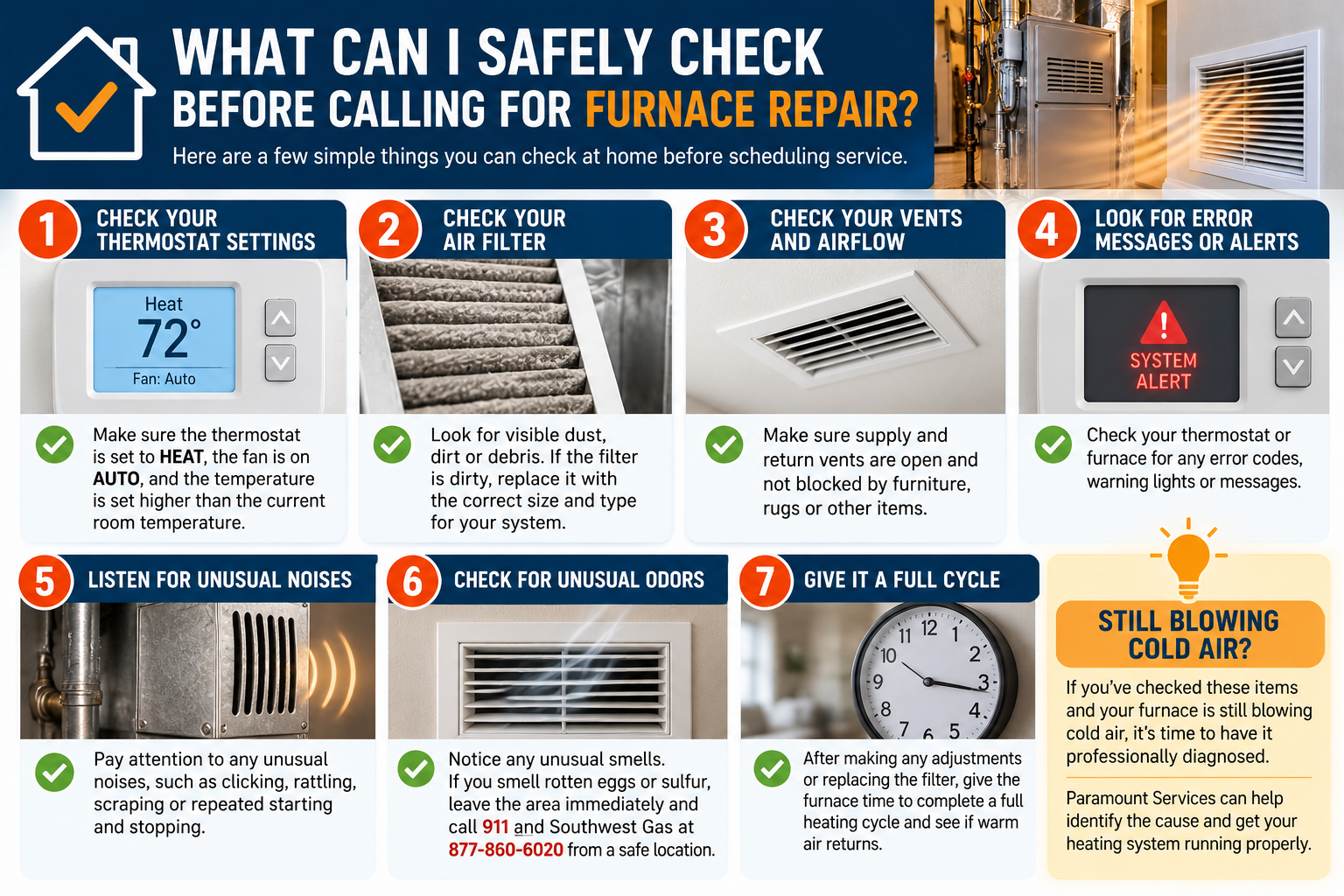
What Can I Safely Check Before Calling for Furnace Repair?
There are a few basic things homeowners can check without taking the furnace apart.
Start Here:
✓ Make sure the thermostat is set to HEAT
✓ Make sure the fan is set to AUTO
✓ Confirm the thermostat temperature is above the current room temperature
✓ Check whether the furnace filter is dirty
✓ Make sure supply and return vents aren't unintentionally blocked
✓ Note any unusual noises, odors or system behavior
✓ Check whether your thermostat or furnace is displaying an obvious error or alert
Then give the system a chance to complete a normal heating cycle.
If you're still getting cold air, it's time to determine what's happening inside the system.
What Should You NOT Do?
Furnaces contain electrical components, moving parts, safety controls and—on gas-fired equipment—fuel and combustion components.
Avoid trying to:
✗ Bypass a safety switch
✗ Increase or alter electrical protection
✗ Force a gas valve open
✗ Repeatedly reset a furnace that keeps shutting down
✗ Disassemble combustion components without the appropriate training
✗ Assume a component is bad simply because an online article lists it as a possible cause
The symptom tells us where to start looking. It doesn't necessarily tell us which part has failed.
What If My Furnace Smells Like Gas While Blowing Cold Air?
This changes the situation.
If you smell rotten eggs or sulfur and suspect a natural gas leak, don't continue troubleshooting the furnace.
Leave the area immediately.
Once you're safely away from the property, call 911 and Southwest Gas at 877-860-6020 from a safe location.
Likewise, if a carbon monoxide alarm sounds, get outside to fresh air and seek emergency assistance.
These situations should be treated as safety concerns first—not routine furnace service calls.
When Should I Call for Furnace Repair?
Consider scheduling professional furnace service when:
The furnace continually blows cold air
The burners won't stay on
The furnace repeatedly starts and stops
You've confirmed the thermostat settings and filter aren't the obvious problem
The furnace is making unusual noises
The system isn't maintaining the thermostat temperature
A breaker, safety control or furnace fault repeatedly occurs
Heating performance has noticeably changed
A technician can evaluate the furnace's operating sequence rather than simply replacing parts until the problem disappears.
Frequently Asked Questions
Why is my furnace running but not producing heat?
Possible causes range from thermostat settings and restricted airflow to ignition, flame-sensing, safety-control, gas-supply or other equipment problems. If basic thermostat and filter checks don't resolve the problem, the system should be diagnosed.
Can a dirty furnace filter cause cold air?
A severely restricted filter can contribute to airflow problems and furnace overheating. If a safety control interrupts burner operation while the blower continues running, you may eventually feel cooler air coming from the vents.
Why does my furnace ignite and then shut off?
There are several possible causes, including flame-sensing, airflow, overheating and control-related problems. The timing and sequence should be tested rather than assuming a particular component has failed.
What does a furnace limit switch do?
A furnace limit control helps protect the system from unsafe operating temperatures. If a furnace repeatedly reaches its high-temperature limit, the underlying reason should be diagnosed rather than bypassing the control.
Why does my furnace blow cold air when the fan is ON?
When the thermostat fan is set to ON, the blower can circulate air even when the furnace isn't actively heating. Setting the fan to AUTO generally allows it to operate with the heating cycle instead.
Should I turn my furnace off if it's blowing cold air?
If you've checked the thermostat and filter and the furnace continues malfunctioning, shutting the system down and arranging service may be appropriate rather than repeatedly resetting it. If you smell gas, a CO alarm sounds, or another immediate safety concern exists, leave the property and follow emergency guidance instead.
Furnace Blowing Cold Air in Las Vegas?
Your furnace doesn't have to stop running completely to have a problem.
If your system is running but not heating properly, Paramount Services can diagnose the furnace and determine why the heating cycle isn't operating as expected.
Our goal is to identify the cause of the problem, explain what we find and discuss the appropriate repair options.
Paramount Services
Serving Las Vegas, North Las Vegas, Henderson & Boulder City
📞 (702) 861-0036
🌐 ParamountServicesLV.com
Nothing is More Paramount Than Your Comfort.